
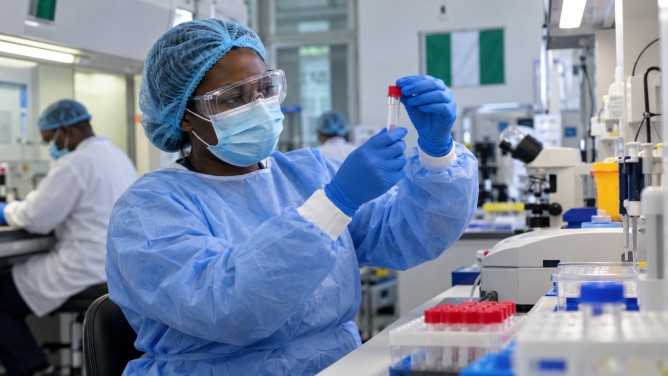
Nigeria has confirmed its first case of Ebola in the capital city of Abuja, raising concerns about the spread of the virus in the region. The patient, a woman who had traveled through Uganda, tested positive for Ebola, prompting Nigerian health authorities to initiate contact tracing and enhance disease surveillance efforts.
The Nigerian health ministry reported that the woman developed symptoms on October 7 and was admitted to a hospital in Abuja four days later, where she was diagnosed with the virus. While the ministry has yet to disclose her nationality or the date she arrived in Nigeria, Health Minister Muhammad Pate confirmed that 44 individuals who may have come into contact with the patient have been identified. Efforts are ongoing to trace these contacts and implement containment measures to prevent further transmission.
According to Uganda’s health ministry, the woman had traveled to the eastern Democratic Republic of the Congo for business and only transited through Uganda. The ministry emphasized that transit through Uganda does not definitively indicate where the infection occurred, and the source of exposure remains under investigation.
This confirmed case in Nigeria arises amid growing concerns about the proliferation of the Bundibugyo strain of Ebola across several African countries. Neighboring Kenya has also reported infections, leading regional governments to bolster monitoring and preparedness measures. In response, the Nigeria Centre for Disease Control has intensified its surveillance efforts, focusing on early detection, laboratory testing, patient isolation, contact tracing, and infection prevention to protect healthcare workers.
Africa’s public health authorities have warned that the outbreak presents a significant regional challenge, as infections have been reported across multiple geographical areas. The Bundibugyo strain, a form of Ebola virus disease, is known for causing severe illness and death, necessitating swift identification of infections and coordinated public health actions to curb its spread.
Nigeria’s strategy involves containing the confirmed case, tracing all potential contacts, and enhancing preparedness as investigations into the source of the infection continue. The country’s efforts are part of a broader regional initiative to manage the outbreak and minimize its impact on public health.