
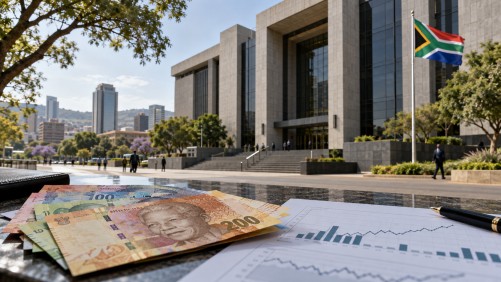
South Africans can expect an increase in borrowing costs as the South African Reserve Bank (SARB) has raised the benchmark repo rate to 7.25%, prompting a rise in the prime lending rate to 10.75%. This decision, unanimously approved by the SARB’s Monetary Policy Committee, is likely to impact households and businesses with variable interest rate loans, as it comes amid mounting concerns over inflation and rising fuel prices.
The economic landscape in South Africa has been challenging, with the economy contracting by 0.2% in the second quarter. However, the SARB remains optimistic about recovery, projecting an annual growth rate of 1.2% and medium-term growth around 2%. Despite this optimism, the pressure from renewed fuel price increases poses a significant risk, potentially driving inflation above 5% later this year and into early 2027 before a gradual decline to around 3% by the end of 2027.
Fuel prices have been a focal point of concern, as the SARB reports an average under-recovery of R2.83 per litre, suggesting further price hikes at the pump are possible. These increases could have a cascading effect, raising costs across the transport, logistics, and manufacturing sectors, and placing additional strain on household budgets.
While fuel prices soar, food inflation has offered some respite. Strong harvests and stabilizing meat prices have driven food prices to their lowest levels since 2010, providing a buffer against broader inflationary pressures. Nonetheless, the SARB remains cautious, indicating that interest rates might remain stable for the rest of the year, with future adjustments contingent on economic data and inflation trends.
The next Monetary Policy Committee meeting is set for November 19, 2026, when the SARB will reassess its approach in light of evolving economic conditions. Until then, South Africans will need to navigate the implications of the rate hike and its effects on their financial commitments.