
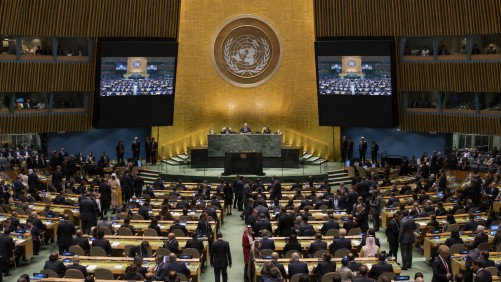
The gathering of nearly 130 world leaders in New York for the United Nations General Assembly could have significant implications for global conflicts and international relations, especially amid mounting tensions in the Middle East and Ukraine. As leaders convene, discussions are expected to focus on major geopolitical challenges, including the Russia-Ukraine conflict, the Gaza situation, and the implications of artificial intelligence on global systems.
US President Donald Trump is poised to play a central role, with scheduled addresses and meetings with key figures such as Ukrainian President Volodymyr Zelenskyy, British Prime Minister Andy Burnham, and Japanese Prime Minister Sanae Takaichi. The interactions could potentially influence ongoing diplomatic strategies and military support in regions like Ukraine, where discussions around a temporary halt to attacks on energy infrastructure are on the table. French President Emmanuel Macron, in talks with Trump, emphasized the need to bolster Ukraine’s defenses, signaling a unified front on European security issues.
The UN assembly will also spotlight the Gaza conflict, with efforts towards a two-state solution high on the agenda. Irish Prime Minister Micheál Martin is expected to participate in discussions aimed at securing a permanent ceasefire and advancing peace negotiations, reflecting the international community’s interest in resolving longstanding Middle Eastern tensions.
Iran’s participation, led by Foreign Minister Abbas Araghchi, introduces another critical dimension to the assembly’s discussions. Araghchi has indicated that Iran will use the platform to assert its positions and advocate for its national interests. Meanwhile, US Secretary of State Marco Rubio has expressed Washington’s openness to dialogue with Iran, reiterating the US’s commitment to preventing Iran from developing nuclear weapons, although no direct meetings have been scheduled.
The UN General Assembly thus serves as a pivotal stage for addressing some of the world’s most pressing issues, with the outcomes of these high-level discussions potentially shaping international policies and alliances in the months to come.